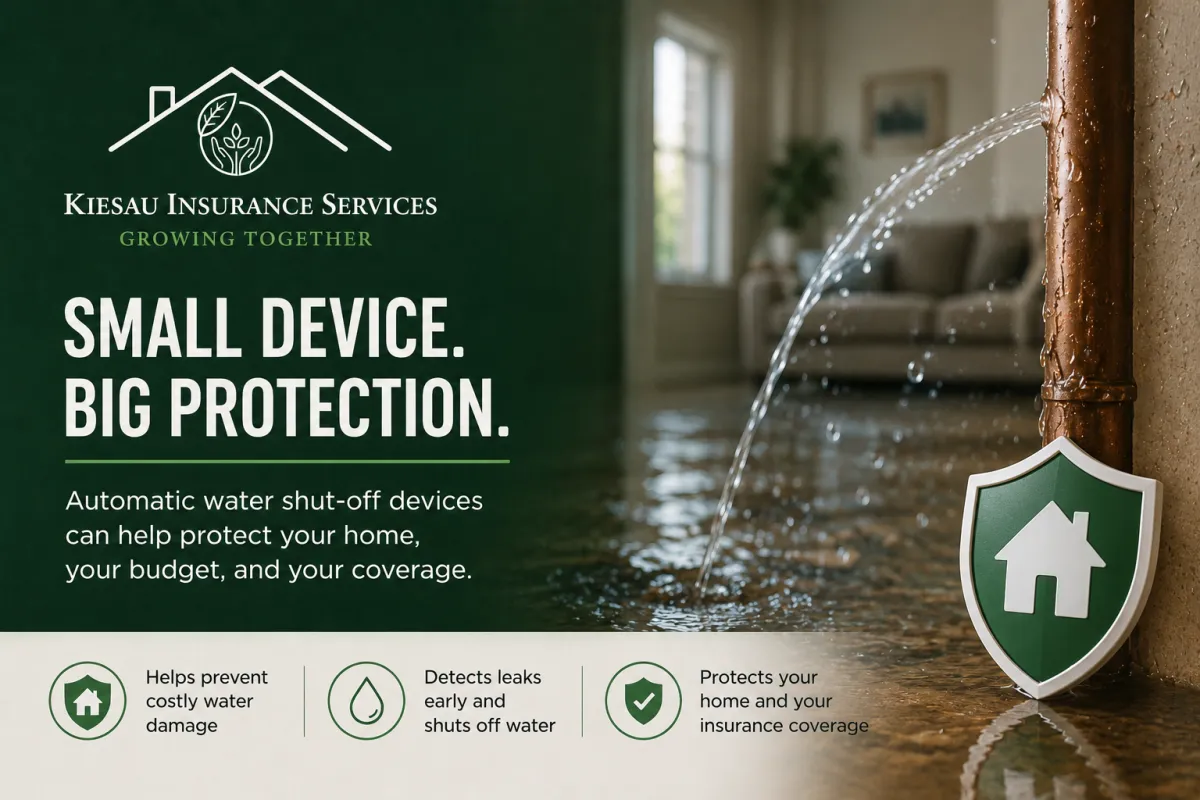
Why Automatic Water Shut-Off Devices Are Becoming Essential for California Home Insurance | Kiesau Insurance Services
Automatic Water Shut-Off Devices Are Becoming the New Standard in California Home Insurance
California’s insurance market has been evolving fast—but one of the biggest shifts happening right now isn’t wildfire-related.
It’s water.
Specifically, how insurance companies are starting to handle non-weather water damage—and what they’re requiring homeowners to do about it.
The Quiet Problem Driving This Change
While wildfire gets the headlines, non-weather water losses (burst pipes, slow leaks, appliance failures) are one of the most frequent and costly types of claims for insurance carriers.
And unlike wildfire…
these claims happen every single day.
Carriers have taken notice—and they’re adjusting underwriting guidelines accordingly.
What’s Changing Right Now
We’re seeing three clear approaches from insurance companies across California:
1. Mandatory Automatic Water Shut-Off Systems
Some carriers are now requiring smart shut-off devices to even qualify for coverage—especially on higher-value homes or older properties.
These systems:
Monitor water flow in real time
Detect unusual usage or leaks
Automatically shut off the main water line to prevent damage
This is becoming more common for:
Homes 30+ years old
High Coverage A limits ($2M+)
Secondary or seasonal properties
2. Coverage Restrictions Without a Device
Other carriers aren’t requiring installation—but they are limiting your protection if you don’t have one.
This can look like:
Lower sub-limits for water damage
Exclusions for certain types of leaks
Stricter underwriting review
In simple terms:
you can still get coverage—but not the same level of protection.
3. Discounts for Proactive Protection
Some carriers are taking a softer approach—for now.
They’re offering:
Premium discounts
Preferred underwriting status
Better overall eligibility
But make no mistake…
this is likely a transition phase.
Why This Matters for Homeowners
Water damage claims are:
Extremely common
Often preventable
Increasingly expensive due to modern repair costs
From an insurance company’s perspective, these devices:
Reduce claim frequency
Limit severity of damage
Provide real-time risk monitoring
From your perspective, they:
Protect your home
Prevent major disruptions
Potentially lower your insurance costs
Where This Is Headed
Just like we’ve seen with:
Roof requirements
Electrical panel updates
Wildfire mitigation
Automatic water shut-off devices are on track to become a standard expectation—not an upgrade.
As carriers cautiously re-enter the California market, they’re looking for:
Lower-risk homes
Preventative technology
More predictable losses
Homes with these systems will likely:
Have more carrier options
Qualify for better pricing
Avoid last-minute underwriting issues
What You Should Do Now
If your home falls into any of these categories:
30+ years old
Higher property value
Seasonal or secondary residence
…it’s worth having a conversation now—not later.
Because once it becomes required,
you don’t want to be installing one under pressure during a renewal or escrow.
Final Thought
This isn’t just another insurance trend.
It’s part of a larger shift toward data-driven, prevention-first underwriting.
And in California’s current market,
those who adapt early are the ones who benefit most.
If you want to see how this could impact your current policy or future options, we’re happy to take a look.